
How Much Does Android App Development Cost in USA?


7 August, 2026
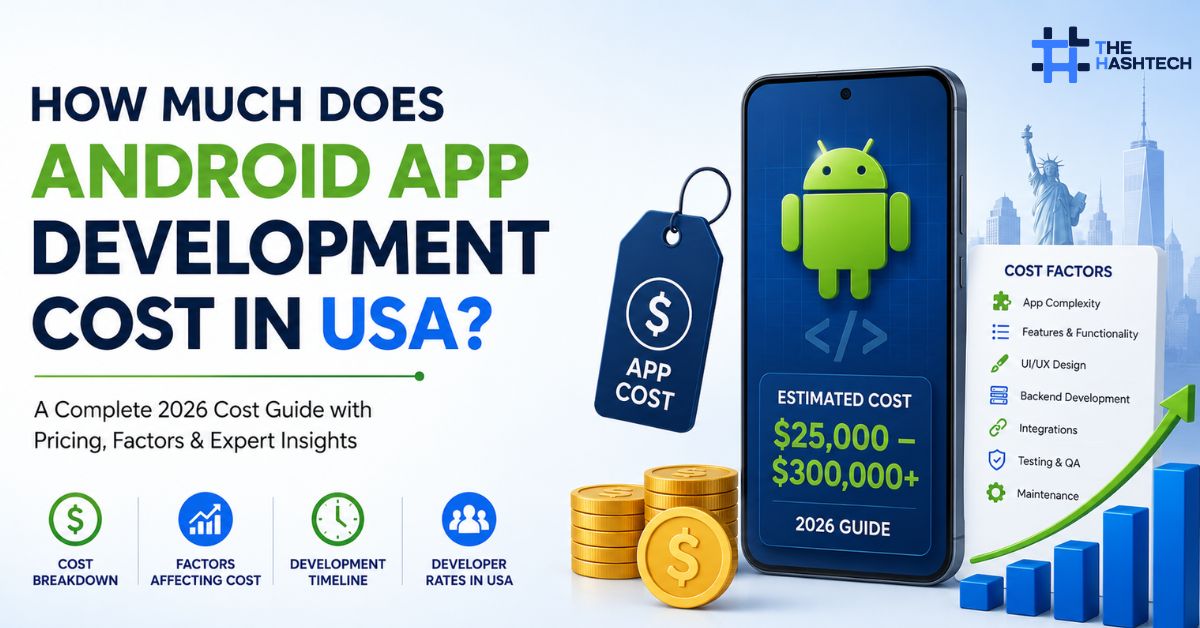
Beyond being a daunting journey, you have to deal with the fact that Android app development costs in the USA can be quite a lot of money. For 2026, it can be between around $25,000 for a simple app and 300,000+ USD for a complex app.
If you are not a tech guy, it sounds like a “few hundred dollars paid to the programmer” for building a mobile app.
Actually, it is complicated, as the final cost is not tied to how many screens you want to have in your app. There are multiple factors impacting the final price. This will be covered below in this guide to save the time and the money you will spend on the Android app development process. In the end, even such a detailed guide will not provide you with a total sum, as there are too many factors. Also, we will compare the most common Android app development companies.
Quick Answer: How Much Does Android App Development Cost in USA?
For a practical 2026 budget, businesses can use the following ranges:
| Android app type | Estimated cost | Typical development time |
| Basic / MVP app | $25,000–$60,000 | 2–4 months |
| Medium-complexity app | $60,000–$150,000 | 4–7 months |
| Advanced app | $150,000–$300,000 | 6–10 months |
| Enterprise / highly complex app | $300,000+ | 9–12+ months |
Keep in mind these figures are planning estimates and not industry prices. An Android app for an internal business application and a nationwide marketplace may both be called Android apps, but their engineering requirements can be very different. The best way to get a good estimate is to define the features and technical requirements then, request an itemized quotation.
Android App Development Cost by Complexity
Basic Android App
A basic Android app normally focuses on one primary purpose and has a relatively limited feature set.
It might include:
- User registration and login
- User profiles
- Basic content
- Search
- Push notifications
- Simple forms
- Basic dashboard
- Contact or booking functionality
For this type of project, the budget can generally start around $25,000–$60,000.
A startup building an MVP will often benefit from this approach because it allows the business to launch its core idea without spending heavily on features that may not be necessary during the first release.
Medium-Complexity Android App
A medium-complexity app will have more user workflows and more to do on the backend. It might incorporate payments, maps, bookings, messaging, reviews, subscription plans, multiple user roles, API integrations, and special screens for an admin. This stage of complexity is usually between $60,000–$150,000 to develop. Now, the scope gets a little more complicated as architecture and testing come into play. Multiple parts of the app will need to reliably talk to each other.
Advanced Android App
Advanced applications typically include sophisticated business logic, real-time functionality, multiple integrations, extensive dashboards, advanced analytics, or location-based features.
Examples include:
- Large e-commerce platforms
- Healthcare applications
- Logistics systems
- Marketplaces
- Advanced education platforms
- On-demand services
The development budget can reach approximately $150,000–$300,000, depending on the scope.
Enterprise Android App
Enterprise applications are frequently built to support large organizations, larger user bases, complex workflows, and are often designed to include existing business systems. They may require connectivity to CRM, ERP, payment, identity, analytics, cloud, or internal systems. At the same time the reliability/security/scalability/compliance/performance of these large systems must be proven. For these projects, the android app development company and other regions can often exceed $300,000 particularly when the application involves multiple systems, advanced technology, or highly specialized requirements.
What Factors Affect Android App Development Cost in the USA?
There is no single factor that determines the final price. Instead, development costs usually result from several decisions made during planning.
Features and Functionality
Features are one of the biggest cost drivers. Naturally, a simple login perspective and registration system will take significantly less work than a real-time messaging feature, GPS tracking, payment processing, video calling, AI recommendations, or complex subscription management. Before starting development, it’s a good idea to divide the features into three buckets: Must-have features you can’t deploy the product without; Should-have features that can be added at a later stage; and, Nice-to-have features that aren’t essential today but can be added later. Such an approach can help to significantly improve the budget control.
UI/UX Design
There’s a lot you will need to develop even if it’s a simple web/desktop business application that could possibly have a relatively straightforward looking interface. Wireframes, user flows, prototypes, interface layouts, responsiveness, interaction states, usability, visual design and so on. But a consumer product competing against heavily established apps might require extensive UX research and completely customized interactions for each device.
Backend Development
The Android application is only one part of the product.
If your app requires accounts, databases, payments, orders, messaging, analytics, content management, or real-time data, backend development will be required.
A simple backend might be relatively inexpensive, while a high-traffic platform may require scalable cloud infrastructure, multiple APIs, caching, databases, monitoring, and sophisticated security.
Third-Party Integrations
Third-party services can add both development time and ongoing expenses.
Common integrations include:
- Payment gateways
- Maps
- SMS and email
- Social login
- Analytics
- CRM systems
- ERP systems
- Shipping services
- Cloud storage
- AI APIs
Each integration needs implementation, testing, error handling, and maintenance.
Security
There is a tendency to add security measures late in the development process. Starting from zero security can result in slacking, but security measures added in later stages of development are more likely to be missed and weaken the system. For this reason, security should always be considered from the beginning of application development rather than added immediately before launch.
Android-Specific Factors That Can Increase Costs
Android development has some considerations that deserve separate attention.
Device Fragmentation
Android runs on a number of smartphones and tablets with different screen sizes, hardware, operating-system versions, manufactured by different companies and with different performance levels. Developers and QA teams may need to test the application on wider range of devices to cover such diversity. A business that supports carefully selected devices may have a less complex testing strategy than an app that should work reliably on the wide audience.
Android Version Support
Supporting older Android versions can increase testing requirements.
Before development begins, the team should determine:
- Minimum Android version
- Target Android version
- Supported devices
- Required hardware features
- Tablet support
- Accessibility requirements
Supporting every possible device isn’t always necessary. Defining a sensible support matrix can help control costs.
Native Android vs Cross-Platform Development
Since developing native Android apps requires knowledge of Java and Kotlin, being native gives us a deeper level of access to the underlying platform-specific functionality. However, with the use of cross-platform technologies like Flutter and React Native, automation and web development aficionados can now share code between Android and other platforms. If you want to launch both iOS and Android, then sharing the development work might save you time and money if the requirements are suitable for a cross-platform framework. Do not only look at the cheapest technology. One should always keep in mind all the factors affecting the choice of technologies, such as performance, functionality, performance on future platforms, maintenance, and taste.
How Much Does It Cost to Hire Android Developers in the USA?
There is a tendency to add security measures late in the development process. Starting from zero security can result in slacking, but security measures added in later stages of development are more likely to be missed and weaken the system. For this reason, security should always be considered from the beginning of application development rather than added immediately before launch.
A professional team may include:
- Android developers
- UI/UX designers
- Backend developers
- QA engineers
- Project managers
- DevOps engineers
- Security specialists
This is why I believe comparing two companies needs to be more than just hourly rate comparison. For the same project the team that charges more may be completing the project faster or may be providing a more complete development process.
Freelancer vs Development Company vs Offshore Team
Businesses have several options when choosing an Android development team.
Freelancer
In most cases, freelancers are a good choice for smaller projects or individual development tasks. As a rule of thumb, they set lower hourly rates. In many cases, these specialists will need additional specialists for design, backend, QA, security, and project management as the product becomes more complicated.
Development Company
Working with a development company means having everything under one umbrella. Usually, they can assemble a team that covers all the skill sets you need in mere days. The team can distribute their efforts across your entire project, speeding up its development, taking The Ease out of coalescing a multi-channel project by allowing you to focus on what matters. The money spent on the right mobile app development company translates into long-term benefits.
Offshore Team
So, yes, you can get outsourcers to do work for you for less money. They aren’t going to do the work for free. (Even a little bit.) But those other things I mentioned they are all things are your responsibility to think about and consider for your project. In other words, your hack year 1.
How Much Does Android App Development Cost by Industry?
The industry you’re targeting also influences the budget because different applications require different functionality.
E-Commerce Apps
Shopping apps will have a simple interface and a minimum set of features like accounts, cart, and payment forms. And at the same time, if your app is a huge online marketplace, you may need to incorporate complex integrations with multiple apps and third-party services and of course, hire more people to develop and support the functionalities.
Healthcare Apps
Healthcare apps are also quite complex. Any apps that require privacy and security increase the complexity of development and costs.
Fintech Apps
Fintech apps require stronger security measures and complex transaction management, including payments, digital wallets, identity verification, transaction histories, fraud prevention, and integrations with other banks, financial institutions, and authorities. This increases the complexity and costs of Fintech Application Development.
Food Delivery Apps
Food delivery platforms require customer apps, restaurant management apps, delivery apps, GPS tracking, order management, payment processing, and notifications. Because these apps involve multiple user roles and systems, they tend to be more expensive to develop than simple ordering apps.
Marketplace Apps
Marketplace apps connect at least two different groups of users, like buyers and sellers. Listings, search, messaging, payments, reviews, notifications, seller dashboards, dispute management, and a variety of other features all add to the development costs and app complexity.
How Much Does Each Development Stage Cost?
A few factors that can impact your final quotation and what kind of work you should expect to get from a company. Not only can knowing the stages make pricing easier to evaluate it can help you better understand the development process and how your budget is being used. To make the whole process easier to understand I am briefly talking about what each of these six stages do.
Finally, the testing, Quality Assurance (QA), and deployment phase is where the app is sent through a rigorous series of tests. During this phase, the QA team members test the functionality of the app, mobile device, OS versions, performance, security, usability, and integrations. During this phase, the app is also prepared for release, tested on different platforms, and publishing through Google Play and Apple App Store. There is no doubt that these six stages are critical to the success of an app. Perhaps this is also a reason why it is continually difficult for developers to create a simple process to help the process of making apps easier for all involved.
Hidden and Ongoing Costs of an Android App
To make the whole process easier to understand I am briefly talking about what each of these six stages do. Finally, the testing, Quality Assurance (QA), and deployment phase is where the app is sent through a rigorous series of tests. During this phase, the QA team members test the functionality of the app, mobile device, OS versions, performance, security, usability, and integrations. During this phase, the app is also prepared for release, tested on different platforms, and publishing through Google Play and Apple App Store. There is no doubt that these six stages are critical to the success of an app. Perhaps this is also a reason why it is continually difficult for developers to create a simple process to help the process of making apps easier for all involved.
How to Reduce Android App Development Costs
But it’s not inevitable to burn a hole in your pocket or compromise on your app’s features. You can develop a simple yet feature-rich app at an affordable price. We have prepared some advice for you. You should start with an MVP and choose the target features that have to support your business objective. Second, choose a solution based on your technical requirements, not the lowest price on the technology. Third, use third-party APIs instead of building everything from scratch. Also, define the app features prior to development in order to avoid high scope change costs. And lastly, don’t forget to build a stable architecture that you can support in case of an growth in users.
Android vs iPhone: Should You Build Both?
If your target audience uses Android, then starting off with an Android application might be a good idea. If your product is more general to the US, then you may want to support both of the major mobile platforms – Android and iOS. If you launch an i OS version later down the road, make sure to mention this at the start of the architecture stage. This way, the development team can better support your product in the future. If you need to support both i OS and Android, then consider evaluating an iphone app development service in usa as well as an Android development service. The ultimate decision should be based on your target audience, business model, prime features, budget, and long term mission.
How to Compare Android App Development Quotes
Never compare development proposals based only on the final dollar amount.
Before choosing a provider, ask:
- What features are included?
- Is UI/UX design included?
- Is backend development included?
- Which Android versions and devices are supported?
- How much QA testing is included?
- Are third-party integrations included?
- Is deployment included?
- What happens when requirements change?
- Who owns the source code?
- Is post-launch maintenance included?
- What security measures are included?
A $60,000 quotation and a $120,000 quotation may look dramatically different until you discover that one includes only Android development while the other includes design, backend, QA, deployment, and several integrations.
For businesses specifically evaluating android app development services, an itemized proposal is much more useful than a single total price.
Final Takeaway
The android app development cost in usa starts from approximately $25,000 for one basic MVP, while advanced and enterprise applications will cost $100,000+ (and sometimes more than $300,000). If you plan to build a product with Artificial Intelligence, fintech functionality, integrations, and security the uber-advanced android application will require an even larger budget.
The final price depends on various aspects your features, design, backend, integrations, and security requirements, which Android devices, Android development team, and long-term maintenance do you need.
Instead of asking for the cheapest possible android app, the most important thing to do is to define the minimum product you need to launch your startup successfully. Only then you will know your exact budget.
Frequently Asked Questions
1. How much does Android app development cost in the USA?
In the USA for an average mobile app, the development ranges between $25,000–$60,000 for the simplest apps, between $60,000–$150,000 for the medium-complexity apps, and $150,000–$300,000+ for the truly advanced applications. Enterprise projects can go over $300,000 depending on technical and business requirements.
2. How much does it cost to hire an Android developer in the USA?
US Android developers’ rates differ a lot based on experience and specialties. For a practical planning range, we suggest around $80–$200+ per hour. But for senior developers or teams of specialists, the price may be significantly higher.
3. How long does it take to develop an Android app?
A basic Android MVP or a simple app can take us 2–4 months to build (on the lower spectrum). A medium-complexity Android app may require 4–7 months, whereas advanced and enterprise applications inevitably take much longer – 6–12+ months.
4. Is Android app development cheaper with a freelancer or a development company?
A freelancer, as a rule, has a somewhat lower hourly rate than a development company, especially in case of a small project or a simple mobile app. As for the development team, it is always better to work with one team than to hire a freelancer, though.
5. Is native Android development cheaper than cross-platform development?
Cross-platform development, as a In summary, a Cross Platform Development rule, can be a guide in reducing duplicated work while installing the same feature sets to both Android and i OS. However, native Android app development can provide the best user experience if the application has to access the native-specific features or performance. The cheapest solution on the table, is highly dependent.