
iOS vs Android Developers: Do You Need Both for Your App?


25 September, 2026
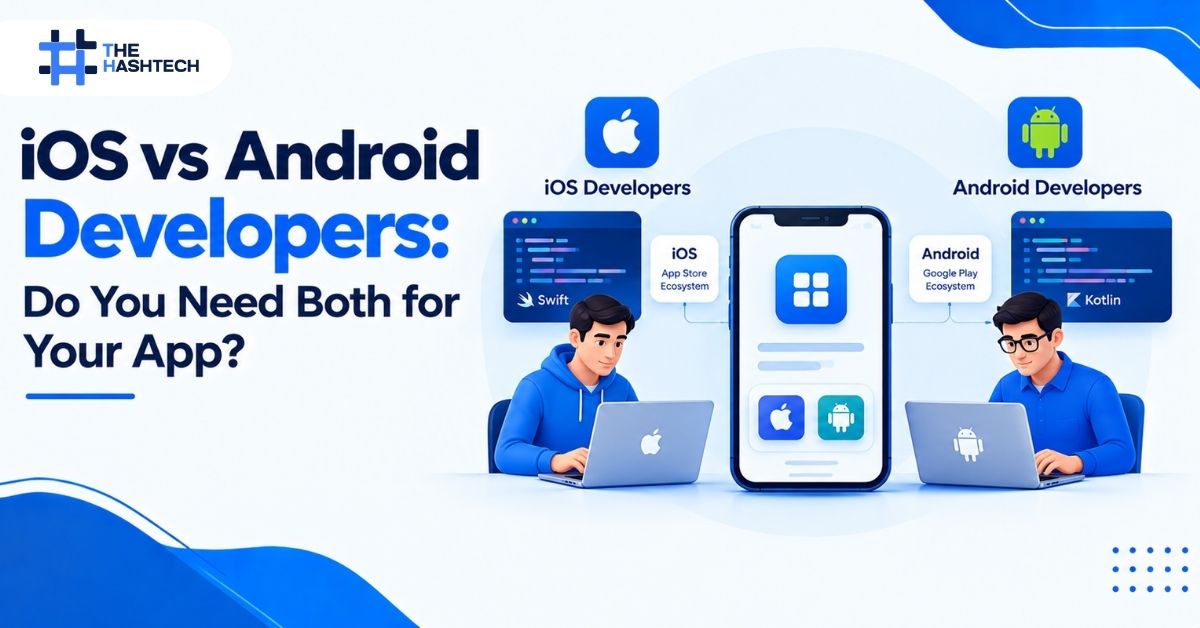
Most apps don’t need two separate developer teams. They need one clear decision about platform priority, made early, before development starts. iOS and Android developers use different languages, different tools, and different design rules. Hiring both isn’t automatically the “safe” choice; sometimes it just doubles your cost without doubling your results.
What an iOS Developer Actually Does
An iOS developer builds apps for iPhone and iPad using Swift and SwiftUI. They work inside Xcode, Apple’s official development environment. Their apps follow Apple’s Human Interface Guidelines, a strict design rulebook. iOS developers also handle App Store submission, which has its own review process and rejection risks.
What an Android Developer Actually Does
An Android developer builds apps using Kotlin, and sometimes Java for older codebases. They work in Android Studio. Android apps run across thousands of device models and screen sizes, so testing looks different here. Android developers also manage Google Play Store submission and Google’s own compliance requirements.
The Core Difference: Skills Don’t Transfer Directly
A great iOS developer isn’t automatically a great Android developer, and vice versa. The languages are different. The design systems are different. Even the testing process is different, since Android has far more device variation than iOS. This is why “full-stack mobile developer” job listings are often misleading; deep expertise in both platforms at once is rare.
Do You Actually Need Both?
Ask three questions before deciding.
Where are your actual users? If your audience skews heavily to one platform, enterprise B2B tools often lean iOS; for example, start there and expand later based on real demand.
What’s your budget and timeline? Building native for both platforms roughly doubles development cost and time compared to launching on one platform first.
Is deep hardware access critical? Apps needing advanced camera control, ARKit, or platform-specific sensors often perform better built natively for each platform, rather than through a shared framework.
When You Genuinely Need Both Native Teams
Some situations do call for separate iOS and Android developers from day one.
- Your app needs deep integration with platform-specific hardware or APIs
- Performance is mission-critical, like in gaming or AR apps
- You already have validated demand on both platforms and need to scale fast
- Your budget genuinely supports two parallel development tracks without compromising quality on either
When One Platform First Makes More Sense
Most early-stage apps are better served launching on one platform first. This lets you validate demand before committing double the budget. It also means faster iteration, since you’re not maintaining two codebases while still figuring out product-market fit. Once you have real usage data, expanding to the second platform is a much lower-risk decision.
The Middle Path: Cross-Platform Development
Frameworks like Flutter and React Native let one team build for both platforms from a shared codebase. This isn’t the same as hiring separate native developers, and it isn’t automatically inferior either. Cross-platform makes sense when your app is mostly UI and business logic, without heavy platform-specific hardware needs. It becomes a weaker fit when performance or deep native integration really matters.
Frequently Asked Questions
Do I need separate iOS and Android developers for my app?
Not always. Many apps launch successfully on one platform first, or use a cross-platform framework to cover both with one team. Separate native teams make the most sense for performance-critical or hardware-heavy apps.
Is it more expensive to hire both iOS and Android developers?
Yes, generally. Building native apps for both platforms roughly doubles development cost and timeline compared to a single-platform launch or a cross-platform build.
Can one developer build both iOS and Android apps well?
Rarely at a deep level. The languages, tools, and design systems differ enough that true expertise in both is uncommon. Cross-platform frameworks solve this differently, by letting one team build for both platforms using shared code.
Which platform should I build for first if I can only choose one?
It depends on where your actual target users are. Check your audience data, competitor app reviews, and industry norms before deciding; don’t default to one platform without evidence.
Is cross-platform development a good substitute for hiring both native teams?
Often, yes, especially for apps that are mostly UI and business logic. It becomes a weaker choice when your app needs deep hardware access or maximum platform-specific performance.
Where The Hashtech Fits
Our mobile app development team builds native and cross-platform apps, and we’ll tell you honestly which approach your specific project actually needs.
For platform-specific work, our Android app development team handles Kotlin and Jetpack Compose builds, while our iOS app development team works in Swift and SwiftUI.
Talk to our team about your platform strategy before you commit budget to two teams you might not need yet.